DIY vs. Professional
Store-Bought Chimney Brush Kits vs. a Professional Sweep in Oregon
By Jesse, Owner · October 23, 2026 · 6 min read
Every hardware store in the Portland metro sells a rod-and-brush kit for somewhere between thirty and sixty dollars, and every fall a handful of homeowners buy one thinking it'll save them a service call. Some of them are right. Most of them end up calling us anyway, usually after they've pulled the brush out covered in black dust and still aren't sure if the chimney is actually safe to use. The truth sits in the middle: a brush kit can do a little bit of the job, but it was never designed to do all of it.
What a Brush Kit From the Hardware Store Actually Does
A basic rod-and-brush kit scrapes loose soot and light creosote flakes off the interior walls of a straight flue. If your stove gets light use and you're comfortable on a ladder, it can knock down surface buildup between professional visits. That's really the ceiling of what it does, though. It doesn't tell you anything about the condition of the crown, the flashing, the damper seal, or the liner itself, because a brush on a rod isn't an inspection tool. It's a cleaning tool, and a limited one at that.
Most kits also aren't matched to the actual shape of your flue. Chimneys bend, step down in size, or run through tile liners with rough joints, and a generic brush bought off a shelf often can't reach the corners or get enough pressure against glazed creosote to do anything but polish it. People are sometimes surprised at how little actually comes down the chute considering how much effort went into the job.
What a Professional Sweep Adds That a Brush Can't
Our chimney sweep and inspection service uses rotary sweeping with HEPA-rated equipment, which pulls far more debris out of the system than hand-brushing while keeping the mess contained inside your home. That matters more than people expect. Chimney dust is fine and gets everywhere, and a shop-vac hooked to a hose isn't the same as a sealed HEPA containment system built for soot.
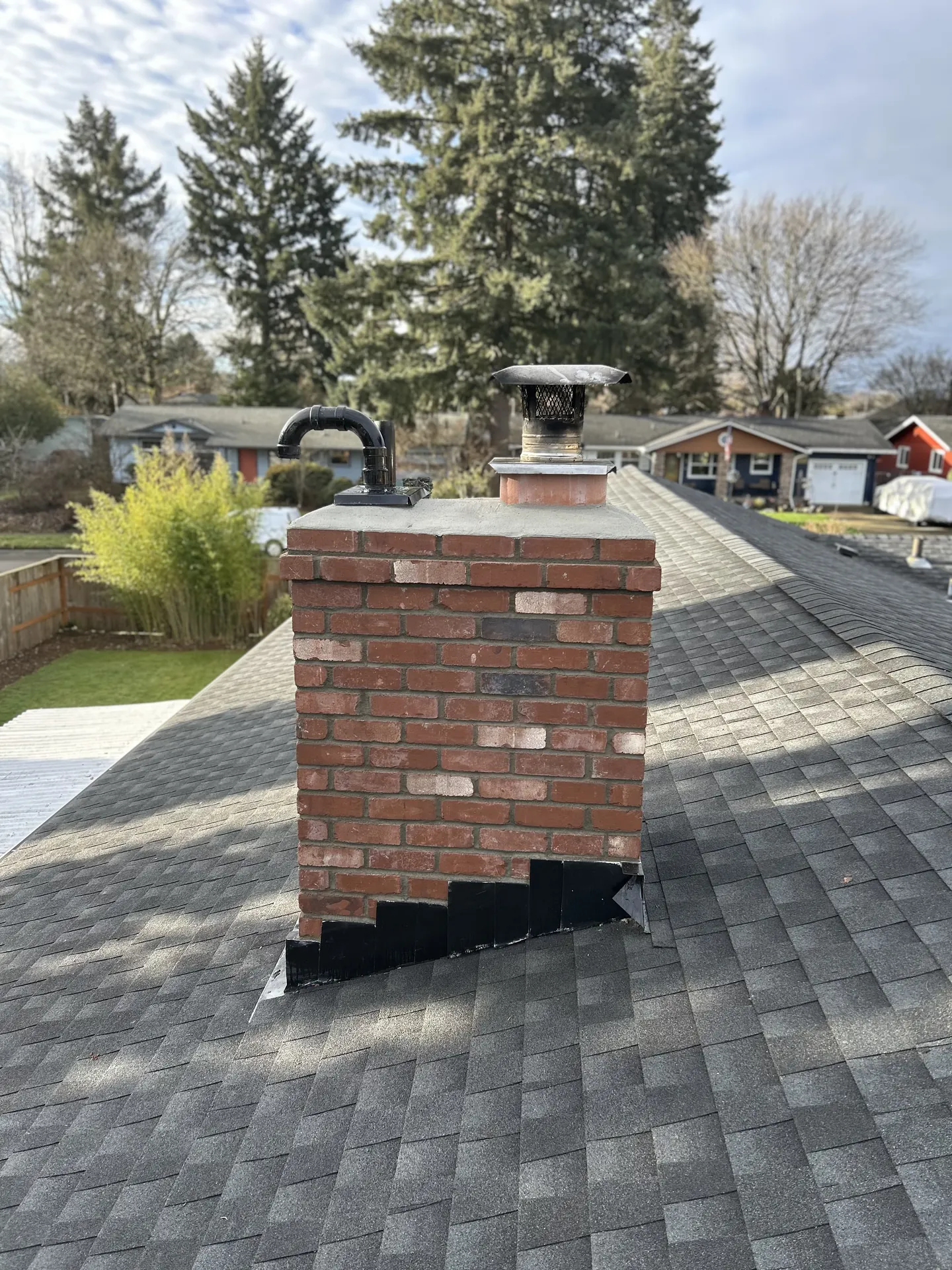
The bigger difference is what happens after the brushing part is done. Every sweep we run comes with a visual inspection of the flue, crown, cap, and connections, because the sweep itself is only half the job. We're looking for hairline cracks in the crown, gaps in mortar joints, rust on the damper, or creosote that's gone glazed and hard rather than flaky, which a wire brush usually won't touch and a homeowner wouldn't know to look for anyway. That's the part a kit from the store simply can't replace, no matter how good the brush is.
Where DIY Sweeping Falls Short in Oregon's Wet Climate
Oregon chimneys deal with a different set of problems than chimneys in drier climates, and most of those problems aren't things a brush was ever meant to find. Moisture gets into brick and mortar through a cracked crown or failed flashing, and once it's in, it freezes and thaws through our winters and slowly breaks the masonry apart from the inside. By the time you can see spalling brick or a water stain on the ceiling near the chimney, the damage has usually been building for a season or two.
We get called out for a fair number of leaks that trace back to flashing that was never properly stepped and sealed against the roofline, something a rod-and-brush kit has no way of catching since it only ever goes down the inside of the flue. Our waterproofing and flashing work deals with exactly this, using breathable masonry sealant and proper step flashing built for the rain we get here rather than a one-size-fits-all patch. If a chimney's masonry has gone past patching and needs a partial rebuild or roofline work that overlaps with the house itself, we also work with Cornerstone Renovations on the construction side of those jobs.
When a Brush Kit Might Be Fine
We're not going to tell you a brush kit is useless, because it isn't, for the right situation. If you burn seasoned hardwood, run your stove moderately, and had a professional sweep and inspection within the last year or two with no flagged issues, a light touch-up with a brush between appointments probably won't hurt anything. It's a maintenance tool for a system that's already been checked out, not a substitute for that checkup.
Where it stops being fine is anytime you're not sure what's going on up there. If you've never had an inspection, if you smell something off when the stove is running, if the chimney hasn't been swept in more than a year, or if you just moved into a house in Estacada or anywhere else in the metro and don't know the chimney's history, that's not a brush-kit situation. That's a call-a-professional situation, because you're not just cleaning a flue at that point, you're trying to find out if it's safe.
The Real Cost Comparison
A brush kit runs you thirty to sixty dollars once, plus your own time on a ladder and the mess afterward. Our flat rate for a full chimney sweep and inspection is $240, and that includes the rotary sweep, the HEPA containment, and the inspection that tells you whether anything else needs attention. When you weigh it against the cost of a masonry rebuild, a new liner, or water damage repair from a flashing leak nobody caught early, the math tends to favor catching problems while they're still small.
We had a job last fall where a homeowner had been running a rod-and-brush kit herself for a couple years, confident the chimney was in good shape because the smoke always drew fine. When we finally got up on the roof, the crown had hairline cracking clear across it and the cap was rusted through at the seams, neither of which she'd had any way to see from inside the house. A new custom cap with our lifetime warranty and a crown repair solved it before the next rainy season, but it's the kind of thing a brush would never have shown her no matter how often she ran it.
Ask Before You Guess
If you're not sure whether your setup needs a full sweep, a cap replacement, or just a basic cleaning, ask us before you buy anything off a shelf. We've been serving the metro since 2022, we're licensed, insured, and bonded under CCB 244885, and most of what we find on a rooftop isn't visible from the living room. A quick call to Services@FirstRateChimney.com or (503) 898-8856 usually sorts out which situation you're actually in.
Ready to book your sweep in Estacada?
Common Questions
FAQ
Can a chimney brush kit remove creosote on its own?
It can remove light, flaky creosote from a straight flue if you apply enough pressure and reach every section. It generally can't remove glazed or heavily built-up creosote, which needs rotary equipment and sometimes chemical treatment from a professional.
How often should a chimney be professionally swept in Oregon?
Most wood-burning systems in the Portland metro should be swept and inspected once a year, especially before the wet season sets in. Heavier burners or older systems may need it more often, which is something an inspection can tell you directly.
Does a brush kit check for chimney leaks or cracked crowns?
No, a rod-and-brush kit only cleans the inside of the flue and gives no information about the crown, cap, or flashing. Those components need a visual inspection from the roof, which is included with every professional sweep we do.
Is a DIY sweep cheaper than hiring a professional in the long run?
It's cheaper upfront, but it can cost more if it misses a developing problem like a cracked crown or failed flashing. A $240 flat-rate sweep and inspection is often far less than the masonry or water damage repair that follows an issue left unchecked.
Still have a question? Email Services@FirstRateChimney.com